

Secure Your DeFi Life: Practical Browser-Extension Wallet Tips (and where to get Rabby)
Whoa! Wallet security can feel like walking a tightrope.
My instinct said “don’t rush it” the first time I dug into extension wallets — somethin’ about how fast people click “connect” without thinking.
Short version: browser extensions are convenient, but convenience often trades off against exposure. Seriously?
Okay, so check this out—most issues aren’t exotic hacks.
They come from small mistakes: reused passwords, loose permissions, and blindly approving transactions.
On one hand you want frictionless DeFi access; on the other, granting full permissions to every dApp is basically handing over keys.
Initially I thought stricter defaults would fix everything, but then realized user behavior beats defaults if the UX makes bad flows easy.
Actually, wait—let me rephrase that: good defaults help, but educating users matters more than a checkbox ever will.
Here’s what bugs me about the current advice: it’s often either too technical or too fluffy.
So I’ll keep this practical.
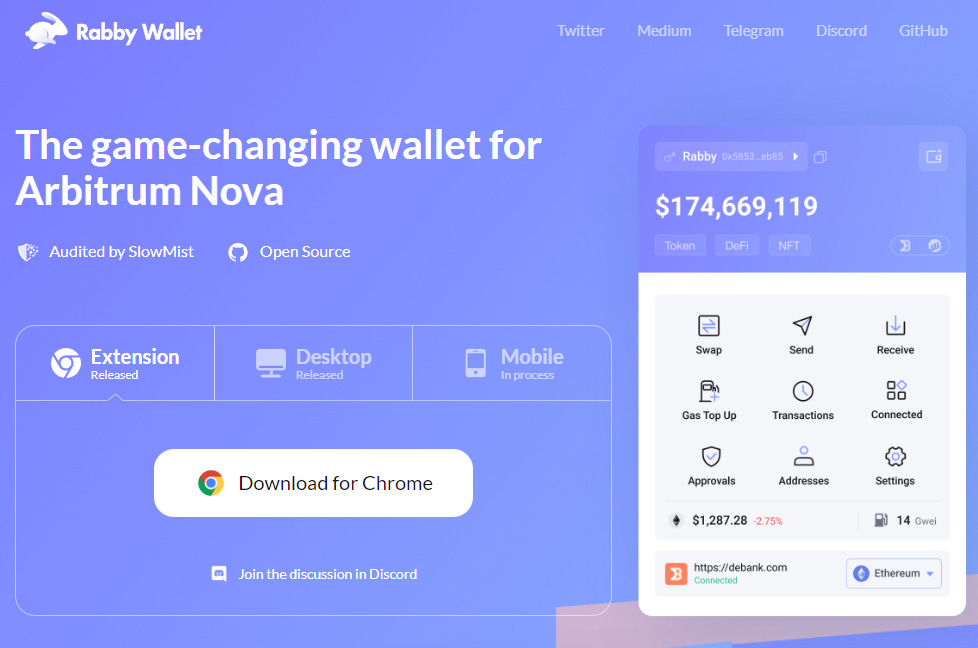
If you want a quick, reasonably secure browser-extension wallet option, you can find a download link here.
I’m biased toward clear UI and granular permission controls, and Rabby tends to get attention for those reasons (but do your own homework, ok?).
Practical security checklist for extension wallets
Short list first.
Read it. Then breathe. Then do it.
- Use a hardware wallet for large balances. Seriously, move big funds offline.
- Create a strong, unique password for your extension and your account email.
- Enable biometric or OS-level unlock if available — it adds a quick layer without too much friction.
- Limit site permissions. Only connect to sites you trust for the session you need.
- Review transaction details. If gas or recipient looks odd, pause and verify.
Hmm… many folks skip the last step because the popup looks like another ad.
That’s a behavioral problem as much as a technical one.
On the technical side, prefer wallets that show clear origin, chain, and exact tokens involved — that transparency matters.
Granular permissions: why they matter
Granting “infinite approval” is a convenience trap.
Medium-length explanation: it lets dApps spend your tokens without asking again, which is handy but risky.
Longer thought: if a site or its backend gets compromised, or if you later realize it was malicious, that infinite approval can let attackers drain funds long after your interaction — so avoid it where possible.
My approach is conservative: approve only the exact amount needed, or use wallets/extensions that let you set allowance caps.
On one hand, this adds friction; on the other hand, it reduces blast radius if something goes sideways.
I’m not 100% sure allowances fully solve the UX friction, but they do reduce risk quite a bit.
Extension hygiene and updates
Extensions need updates. They also need vetting.
Some rules to live by: only install wallets from official sources or verified stores, check publisher details, and read recent reviews.
Also, keep your extension updated — many security patches land in routine releases. That said, sometimes updates introduce bugs, so glance at changelogs if you can.
One common pitfall: multiple similar-sounding wallets exist.
Phishing copies pop up with tiny domain changes.
Double-check the extension publisher and the download link. If you’re unsure, pause and cross-reference official channels — Twitter, GitHub, or a known community forum. (Oh, and by the way… never paste your seed phrase into a website.)
Using hardware wallets with browser extensions
Short sentence. Then more.
Connect hardware wallets through the extension whenever possible.
This keeps the private keys offline while letting you interact with dApps through the browser.
Longer reflection: using a hardware device does not make you invincible — social engineering and malware on the host machine can still trick you into signing malicious transactions — but it raises the bar substantially.
Pro tip: review the transaction data on the hardware device itself, not only in the browser popup. The device shows exact recipient addresses and amounts; confirm both.
If the device screen is tiny or cryptic, that’s a UX failure — be suspicious.
When something looks off
If a dApp requests an unexpected permission or a transaction you didn’t intend to sign, stop.
Disconnect. Revoke permissions. Ask the community.
Yes, it’s annoying. But revoking approvals can prevent a lot of damage.
There are tools and explorers that show token approvals — use them to audit and revoke if needed.
Initially, my gut said “that’ll never happen to me” — then I watched a friend lose funds via a phishing dApp flow.
She was careful about seed phrases, but clicked a malicious prompt.
It was avoidable. And that story stuck with me.
Behavioral tips that actually work
Be methodical.
Create a ritual: check origin, read the transaction, confirm on hardware if available.
Use different wallets for different purposes — a daily-use wallet with small balances and a cold wallet for savings.
On the privacy side, mixing transactions across accounts is fine, but don’t assume anonymity will save you from targeted scams.
Also: backup your seed phrase offline, in multiple secure locations. Paper is low-tech but effective.
Don’t photograph your seed and store it in cloud backups unless you really understand the risks — and most people don’t.
FAQ
Is a browser extension wallet safe enough for DeFi?
Short answer: for small amounts and active trading, yes with precautions.
Longer answer: use it for convenience and hot funds; use hardware or cold storage for large holdings. Limit approvals and keep extensions updated. Behavior beats any single security feature.
How do I verify an extension is legitimate?
Check the publisher name, cross-reference official project channels, and download from trusted stores.
Look for community reviews and GitHub activity. If something feels off, pause. Trust but verify — okay, maybe trust a little less.
Can I revoke token approvals?
Yes. Use the wallet UI or third-party tools that list allowances to revoke or reduce approvals. Do that regularly — it’s a small step with big payoff.
0 comments on Secure Your DeFi Life: Practical Browser-Extension Wallet Tips (and where to get Rabby)